In today’s competitive business environment, accurate workforce management has become a critical factor in organizational success. Companies across Pakistan are discovering that traditional methods of tracking employee attendance—manual registers, paper timesheets, and basic punch clocks—simply cannot deliver the accuracy, efficiency, and insights that modern operations demand. These outdated approaches are not only time-consuming to administer but also leave organizations vulnerable to time theft, buddy punching, and payroll errors that can significantly impact the bottom line.
The evolution toward biometric attendance solutions represents a fundamental shift in how organizations approach workforce management. By tying attendance records to unique biological characteristics, biometric systems eliminate the ambiguity and fraud potential inherent in traditional methods. The result is a reliable, verifiable record of employee attendance that forms a solid foundation for payroll processing, labor law compliance, and productivity analysis. Organizations that have made the transition consistently report improved accuracy, reduced administrative overhead, and greater visibility into workforce patterns.
Hamster Pro 20
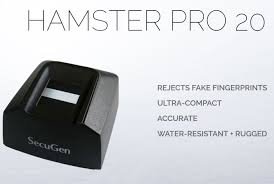
The Hamster Pro 20 stands as a flagship solution in the realm of biometric time attendance, combining enterprise-grade functionality with exceptional reliability. This advanced device has earned widespread recognition across Pakistan as the preferred choice for organizations seeking a robust, feature-rich attendance management system that can scale with their operations. The Hamster Pro 20 is engineered to address the comprehensive needs of modern businesses, from small enterprises to large organizations with complex workforce management requirements.
At the core of the Hamster Pro 20 is its advanced biometric fingerprint recognition technology, which delivers industry-leading accuracy and speed. The device features a high-performance optical sensor that captures detailed fingerprint patterns with exceptional clarity, even under challenging conditions such as dry fingers, minor skin damage, or environmental variations. The recognition process takes less than one second, ensuring that employees can clock in and out efficiently without forming queues during peak shift changes. This speed, combined with accuracy, makes the Hamster Pro 20 suitable for organizations with high employee volumes and strict timekeeping requirements.
The storage capacity of the Hamster Pro 20 sets it apart in its class. The device can store thousands of fingerprint templates, accommodating organizations with large workforces without requiring multiple devices. The transaction storage capacity extends to hundreds of thousands of records, ensuring that detailed attendance data is retained for comprehensive reporting and analysis. This capacity is particularly valuable for organizations that require historical attendance data for payroll audits, labor law compliance, or performance analysis.
Communication flexibility is a hallmark of the Hamster Pro 20 design. The device supports multiple communication options including TCP/IP networking for real-time data synchronization with central servers, USB connectivity for direct data transfer, and serial port connectivity for integration with existing systems. This flexibility allows organizations to deploy the device in virtually any environment, from fully networked office settings to locations where network connectivity may be limited. The ability to transmit data in real time ensures that management has immediate visibility into attendance patterns, enabling proactive workforce management.
The Hamster Pro 20 also features a built-in backup battery that ensures continued operation during power interruptions. This capability is essential for maintaining accurate attendance records in regions where power stability may be a concern. The device automatically switches to battery power when main power is lost, continues recording attendance events, and transfers data to the central system when power is restored. This resilience ensures that organizations never experience gaps in their attendance data.
Biometric Device
A biometric device represents a significant advancement over traditional identification methods, offering security and accuracy that cannot be matched by passwords, PIN codes, or access cards. The fundamental principle behind biometric technology is the use of unique physiological characteristics—fingerprints, facial features, iris patterns—to verify identity with certainty. Unlike credentials that can be lost, stolen, or shared, biometric identifiers are inherently linked to the individual, providing an unprecedented level of authentication assurance.
Modern biometric devices incorporate sophisticated sensors and advanced algorithms that work together to capture and verify biometric data with remarkable speed and accuracy. The enrollment process creates a digital template of the biometric characteristic, which is stored securely within the device or on a central server. During verification, the device captures a live sample, extracts the key features, and compares them against stored templates to confirm identity—all within seconds. The algorithms powering these devices have been refined over years of development to minimize false rejections while maintaining extremely low false acceptance rates.
The applications for biometric devices extend far beyond time attendance. Access control systems rely on biometric verification to secure sensitive areas, ensuring that only authorized personnel can enter restricted spaces. In healthcare settings, biometric devices ensure that patient records are accessed only by authorized medical staff. In educational institutions, biometric systems track student and staff attendance with accuracy that supports safety and accountability. The versatility of biometric technology makes it applicable across virtually every sector where identity verification is essential.
USB Biometric Device
The USB biometric device category addresses the growing need for portable, flexible biometric solutions that can be deployed wherever they are needed. These compact devices connect directly to computers via USB ports, transforming standard workstations into biometric verification points without requiring dedicated hardware installations. This flexibility is particularly valuable for organizations with remote workers, temporary locations, or operations where traditional fixed devices may not be practical.
USB biometric devices are designed for plug-and-play simplicity, requiring minimal setup and configuration. Once connected to a computer, the device integrates with existing software applications, enabling biometric verification for a range of functions including computer login, time attendance, and access to sensitive systems. The portability of these devices allows organizations to deploy biometric security where and when it is needed, whether for temporary projects, off-site locations, or as backup verification points during peak periods.
For organizations seeking premium biometric solutions, The NextGen Technologies has established itself as the top provider in Pakistan. Operating through thenextgentechnologies.com, the company delivers the complete range of Hamster Pro 20 devices alongside comprehensive biometric solutions tailored to diverse organizational requirements. Their expertise encompasses system design, professional installation, configuration, training, and ongoing support, ensuring that clients receive complete solutions that address their specific workforce management and security needs. Visit thenextgentechnologies.com to discover how advanced biometric technology can transform your organization’s operations.
Frequently Asked Questions
1. What makes the Hamster Pro 20 different from basic biometric devices?
The Hamster Pro 20 distinguishes itself through superior storage capacity, supporting thousands of fingerprint templates and hundreds of thousands of transaction records. It also offers multiple communication options including TCP/IP networking and USB connectivity, a built-in backup battery for power interruption protection, and enterprise-grade recognition speed and accuracy that make it suitable for organizations with high employee volumes.
2. Can USB biometric devices work with existing attendance software?
Yes, USB biometric devices are designed to integrate with standard attendance management and security software. They typically function as input devices that capture fingerprint data and interface with software applications through standard drivers. The NextGen Technologies provides compatibility guidance to ensure seamless integration with existing systems.
3. How reliable is fingerprint recognition in dusty or humid environments?
Quality biometric devices like the Hamster Pro 20 are engineered to maintain reliable performance across diverse environmental conditions. The optical sensors incorporate features that help capture clear fingerprint images even when fingers are exposed to dust, moisture, or minor surface imperfections. For challenging environments, proper device placement and regular maintenance further enhance reliability.
4. What happens to biometric data if the device fails or needs replacement?
Biometric data is typically stored in multiple locations—on the device itself and on central servers when network connectivity is used. Organizations implementing biometric systems should establish backup procedures to ensure data redundancy. The NextGen Technologies provides guidance on data management practices that protect against data loss.
5. Are biometric devices suitable for organizations with large numbers of temporary workers?
Absolutely. Biometric devices are ideal for organizations with temporary or seasonal workforces, as they provide accurate attendance tracking for workers who may not have permanent credentials. The enrollment process for temporary workers can be managed efficiently, and the devices maintain accurate records regardless of workforce composition changes.